Post Hip Replacement Surgery in the Elderly: Recovery Is a Journey, Not Just a Procedure | Eldercare in Gurgaon

Post Hip Replacement Surgery in the Elderly: Recovery Is a Journey, Not Just a Procedure

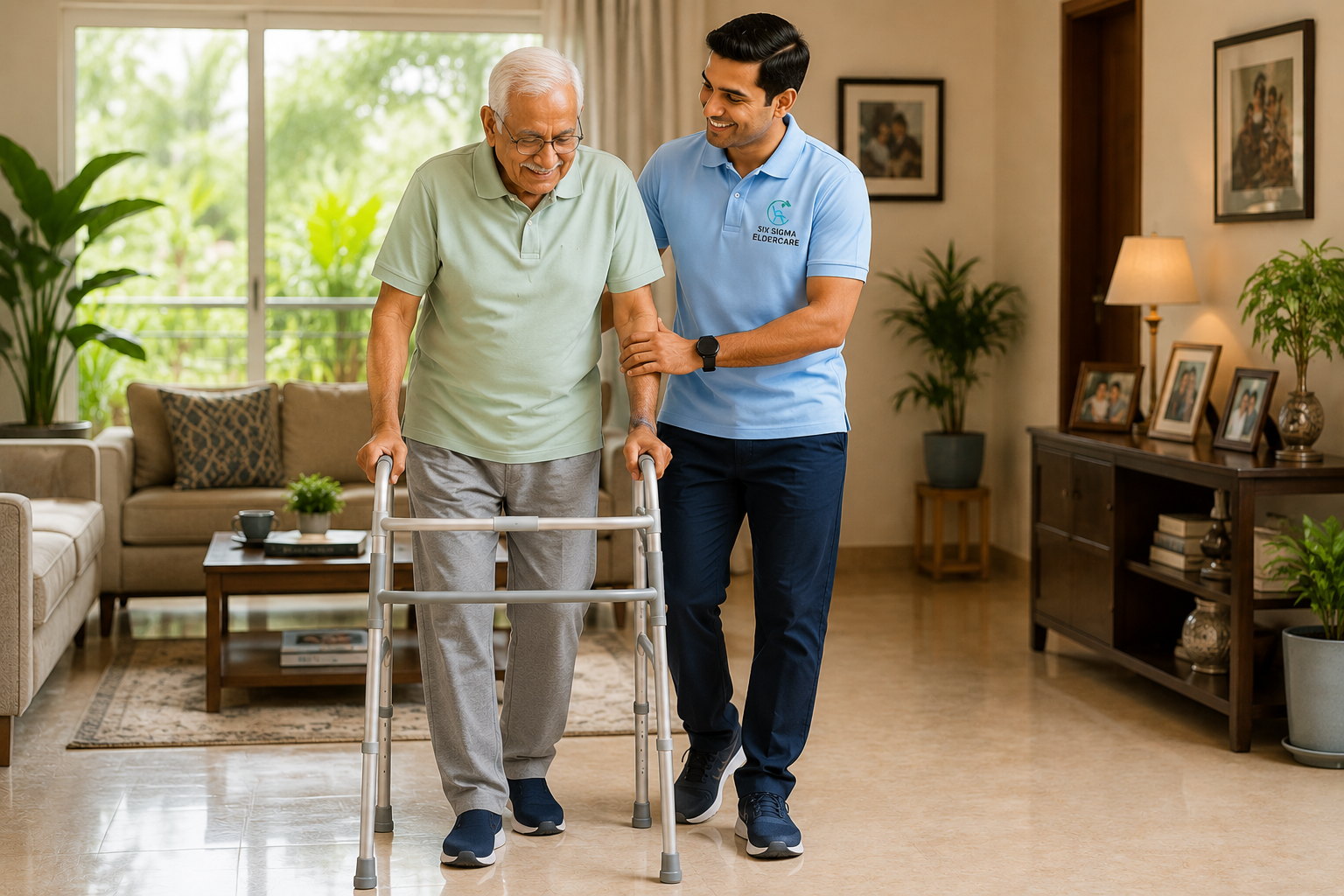
When an elderly loved one undergoes hip replacement surgery, the operation itself is only the beginning. The real challenge starts after discharge from the hospital.

Recently, Six Sigma Eldercare had the privilege of supporting an elderly client in Nirvana Country, Sector 50, Gurgaon following a hip replacement procedure. Like many families, the client’s children were deeply concerned about mobility, pain management, fall prevention, and ensuring a smooth recovery at home.

What Happens After Hip Replacement Surgery?

Most elderly patients experience significant pain relief after surgery, but regaining confidence and independence takes time. During the first few weeks, even simple activities such as getting out of bed, using the washroom, changing clothes, or walking a few steps require assistance.

The initial recovery period often involves:

* Safe transfers from bed to chair
* Assistance with toileting and personal hygiene
* Medication reminders and monitoring
* Support during physiotherapy exercises
* Fall prevention and mobility assistance
* Nutritional support and hydration monitoring
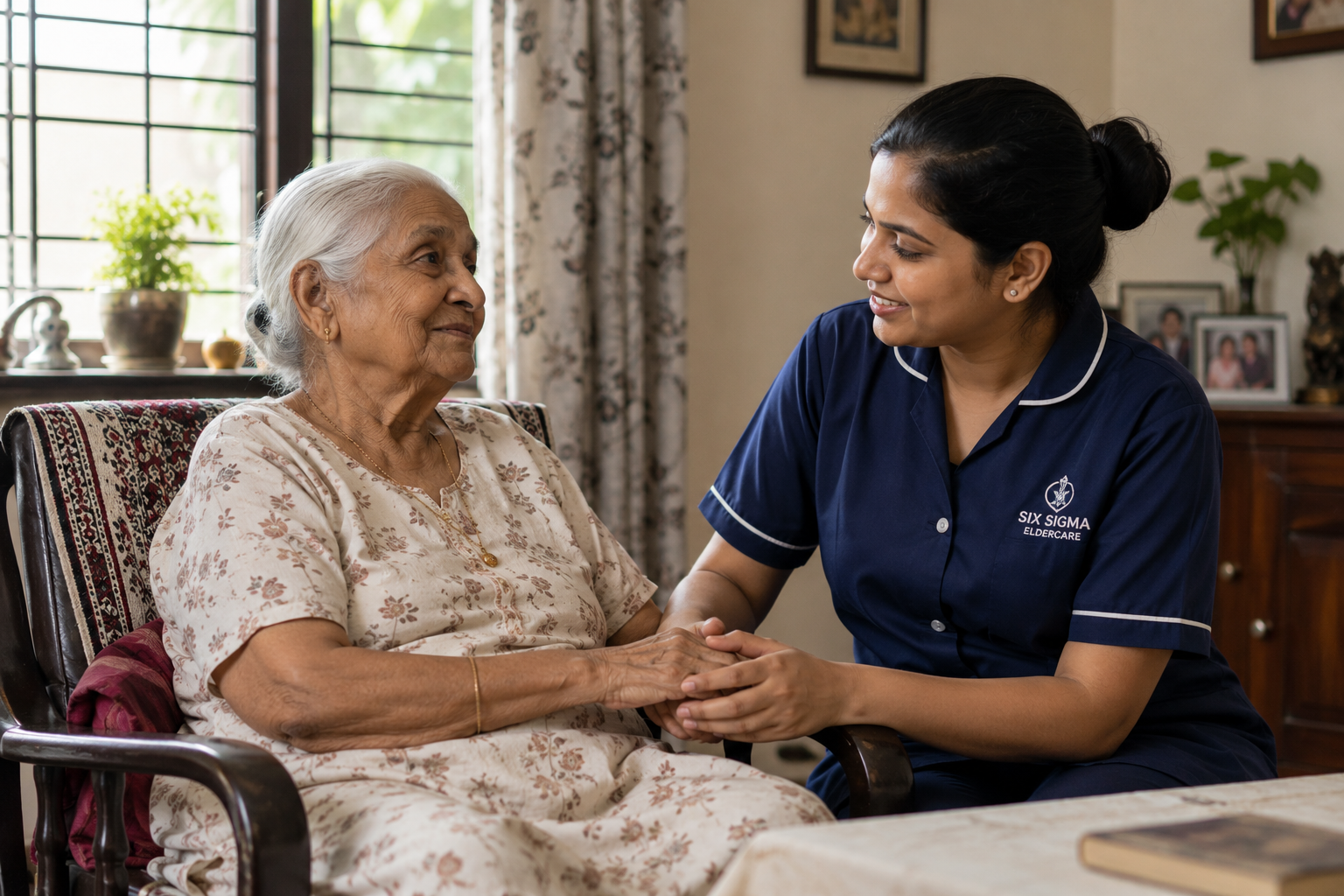
* Emotional companionship and encouragement

How Long Does Recovery Take?

Every patient recovers differently, but a general timeline is:

Week 1–2: Maximum support required for mobility and daily activities.
Week 3–6: Improved walking with a walker or support device. Increased confidence and reduced pain.
Week 6–12: Greater independence in daily routines, although supervision may still be beneficial.
3–6 Months: Most elderly patients return to a comfortable level of mobility and routine living.

Recovery is often faster and safer when professional caregivers work alongside doctors and physiotherapists.

The Role of Caregivers

Many families underestimate the physical and emotional effort involved in post-surgical care.

A trained caregiver does much more than simply “look after” the patient. They become an important part of the recovery team—helping maintain mobility, preventing complications, observing changes in condition, and providing reassurance during a vulnerable period.

For our client in Nirvana Country, Gurgaon, consistent caregiver support helped create a structured recovery routine. Regular assistance with walking exercises, daily care activities, and companionship reduced anxiety and improved confidence during rehabilitation.

Why Professional Eldercare Matters

Hip replacement recovery requires patience, attention, and consistency. Family members often juggle careers, children, and household responsibilities, making round-the-clock support difficult.

Professional eldercare services bridge this gap by ensuring that recovery continues safely at home.

At Six Sigma Eldercare, we understand that every recovery journey is unique. Our caregivers are trained to support elderly patients recovering from surgeries, chronic illnesses, and age-related mobility challenges while preserving dignity and independence.

Supporting Recovery at Home in Gurgaon

As one of the providers of the best eldercare services in Gurgaon, Six Sigma Eldercare works closely with families, doctors, physiotherapists, and caregivers to create a safe recovery environment at home.

Because successful hip replacement surgery is not measured by what happens in the operating room—it is measured by how confidently an elderly person walks back into everyday life.

If your loved one is recovering from hip replacement surgery or any major medical procedure, the right care at the right time can make all the difference.
Changing a Diaper Is Not “Dirty Work” — It Is One of the Purest Forms of Care

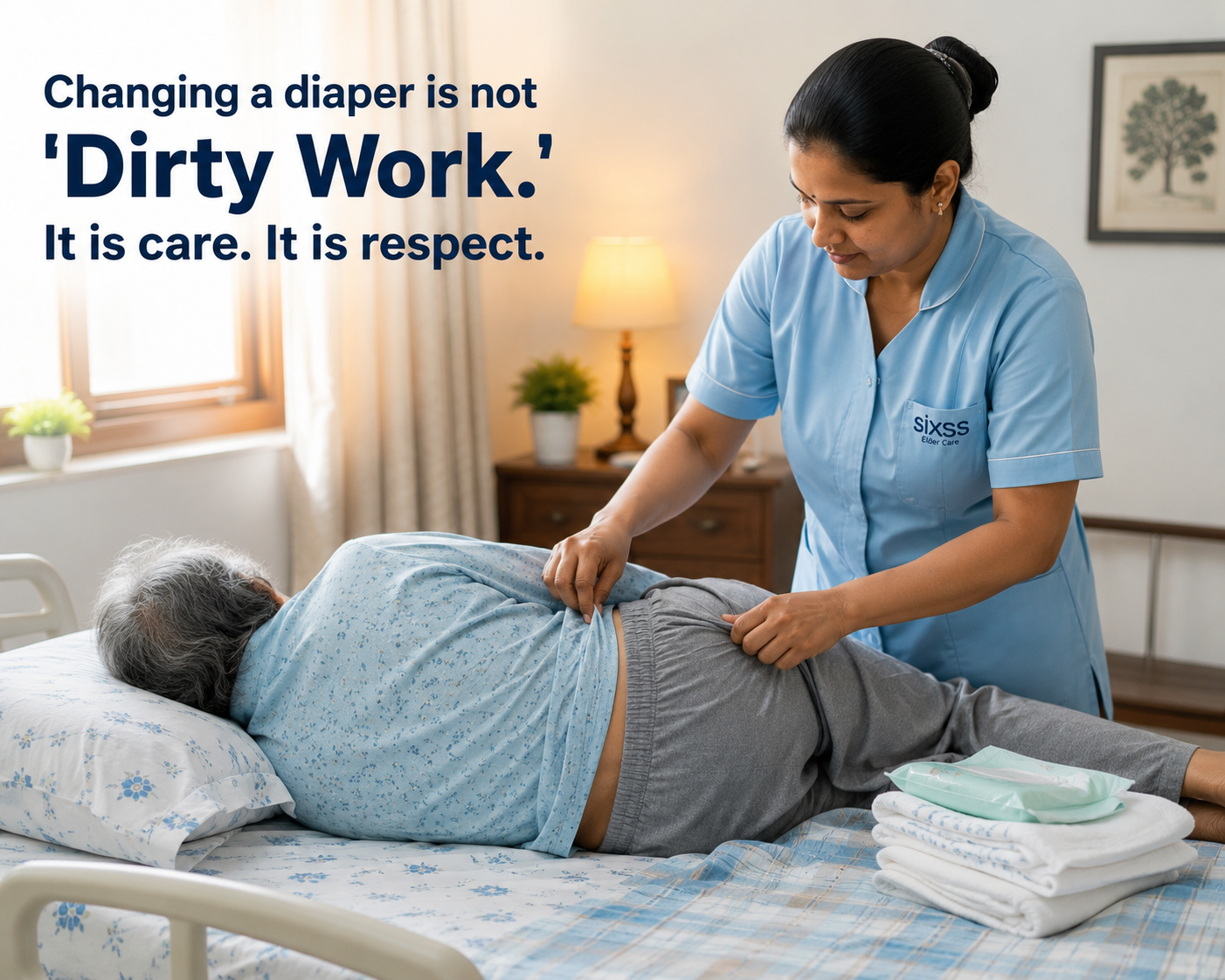
Changing a Diaper Is Not “Dirty Work” — It Is One of the Purest Forms of Care
In the world of eldercare, there is one question that often gets asked before anything else:

“Diaper work rahega?”

Not:

* What is the patient’s medical condition?
* Is the elder recovering from a stroke?
* Does the patient have dementia?
* Are there mobility challenges?

Instead, the first concern is often whether the caregiver will need to perform diaper changes.

This is not unique to one city or one caregiving agency. It is a reality across India’s eldercare sector.

At Six Sigma Eldercare, we work with families, caregivers, and bedridden patients every day. We understand that elderly diaper care is physically demanding. Repeated transfers, hygiene management, changing positions, and maintaining cleanliness require patience, skill, and emotional strength.
Yet perhaps the bigger challenge is not the work itself.
It is how society views the work.

The Double Standard We Rarely Talk About

When a mother changes her baby’s diaper, we call it love.
When a father cleans his toddler after an accident, we call it parenting.
When a nurse performs hygiene care in a hospital, we call it healthcare.

But when a caregiver changes the diaper of a bedridden elderly person, many people hesitate.

Why?

The task is fundamentally the same.
A vulnerable human being needs help.
Another human being steps forward to provide it.
The act itself is not degrading.

In fact, it is one of the most important responsibilities in quality elder care.

No Elder Wants to Be Dependent

This is perhaps the most important truth that families and caregivers should remember.
No elderly parent wants someone else to help them with personal hygiene.
No grandfather wishes to lose his independence.
No grandmother dreams of needing assistance for toileting or diaper care.

Dependency is rarely a choice.

It is often the result of:

* Stroke recovery
* Dementia
* Parkinson’s disease
* Advanced age
* Fractures and mobility limitations
* Chronic illnesses
* Long-term bedridden conditions

Behind every diaper change is a person who once lived independently, worked hard, raised children, built careers, and cared for others.

Today, they simply need support.
Not judgment.
Not discomfort.
Support.

Why Proper Diaper Care Matters in Bedridden Patient Care

For bedridden patients, hygiene care is not just about comfort.
It is a medical necessity.
Poor diaper management can lead to:

* Skin breakdown
* Pressure injuries
* Urinary tract infections
* Fungal infections
* Reduced dignity and emotional well-being

Professional caregivers understand that timely diaper changes, skin care, repositioning, and hygiene maintenance are essential parts of home healthcare services.

Good diaper care protects both health and dignity.

A Message to Caregivers

If you are a caregiver, attendant, nurse, or healthcare worker, your work matters more than you may realize.
Every time you help an elderly patient maintain hygiene, you are doing much more than changing a diaper.

You are helping someone preserve their dignity.
You are reducing discomfort.
You are preventing illness.
You are providing comfort during one of the most vulnerable stages of life.

And that deserves respect.

The future of eldercare in India depends not only on training more caregivers but also on valuing the work they do.

One Day, Our Roles May Reverse

There is a simple thought worth reflecting on.
The parents we care for today once cared for us.
They cleaned us.
Fed us.
Protected us.
Supported us when we could not support ourselves.
Life has a way of coming full circle.
The hands that provide care today may need care tomorrow.
Age does not discriminate.
Illness does not ask permission.
One day, any of us could find ourselves needing assistance from another human being.
When that day comes, we will hope that the person helping us sees dignity, not inconvenience.
Respect, not burden.
Compassion, not discomfort.

The Heart of Eldercare

At its core, eldercare is not about diapers, wheelchairs, medications, or medical equipment.

It is about preserving human dignity.
Changing a diaper is not “dirty work.”
It is healthcare.
It is responsibility.
It is compassion.

Most importantly, it is a quiet act of respect for someone who once spent a lifetime caring for others.
And there is honor in that work.

At Six Sigma Eldercare, we believe that every elderly person deserves compassionate, dignified, and professional care—especially when they need it the most.

Caregivers Are Human Too: The Hidden Crisis Behind India’s Growing Eldercare Challenge

The Question Nobody Is Asking

When families discuss eldercare, the conversation usually revolves around the patient.
How can we ensure better care?
How do we manage dementia?

How do we handle mobility issues, medications, emergencies, and hospital visits?
These are important questions. But there is another question that often goes unasked:

Who is caring for the caregiver?

Across India, families are struggling to find reliable caregivers for elderly parents. At the same time, eldercare agencies face a constant shortage of trained attendants, nurses, and dementia caregivers.
The demand for professional elder care services is rising rapidly.
Yet the supply of caregivers is not keeping pace.

Why?

Many people blame workforce shortages, migration, or lack of training.
But there is another reason we rarely discuss openly:

The way caregivers are often treated inside homes.

The Reality of 24-Hour Caregiving

One of the most common misunderstandings in home healthcare is the concept of “24-hour care.”

Families often assume that because a caregiver is present for 24 hours, they should be working continuously for 24 hours.

But let’s think about that for a moment.
Would any professional in any industry be expected to work non-stop for an entire day?
Of course not.
A 24-hour caregiver is not providing 24 hours of active labor.
They are providing:
* 24-hour availability
* Continuous responsibility
* Emergency readiness
* Overnight supervision
* Immediate response when needed

These are very different things.

Even when an elderly patient is resting, sleeping, or watching television, the caregiver remains responsible for their safety and wellbeing.

That responsibility never truly switches off.

What Caregivers Actually Do Every Day

Many people underestimate the physical and emotional demands of caregiving.
A professional caregiver’s role often includes:

Physical Support

* Assisting with mobility
* Lifting and transferring patients
* Supporting fall prevention
* Helping with walking and exercises
* Managing bedridden patients

Personal Care

* Bathing and grooming
* Toileting assistance
* Diaper changes
* Feeding support
* Hygiene management

Medical Support

* Medication reminders
* Monitoring health conditions
* Tracking symptoms
* Supporting recovery after hospitalization
* Coordinating with doctors and family members

Emotional Support

* Providing companionship
* Managing anxiety and confusion
* Offering reassurance
* Reducing loneliness among seniors

Dementia Care

For dementia patients, caregiving becomes even more challenging.

Caregivers frequently manage:

* Memory loss
* Sundowning behavior
* Aggression
* Repetitive questioning
* Wandering tendencies
* Sleep disturbances
* Emotional outbursts

Many dementia caregivers face verbal abuse, accusations, resistance to care, and unpredictable behavior-not because the patient intends harm, but because dementia affects the brain itself.

Yet caregivers continue showing up every day.

The Hidden Expectations Inside Homes

This is where the challenge often begins.

When the patient is resting, some families start expecting additional work:

Can you wash the dishes?
Can you clean the entire house?
Can you help with laundry too?
Why are you sitting?
Why are you using your phone?

At first glance, these requests may seem small.

But over time they transform a caregiving role into a combination of:

* Housekeeping
* Domestic work
* Personal assistant duties
* Errand management
* Full-time caregiving

The workload expands far beyond what was originally agreed upon.

And the caregiver’s primary responsibility—providing quality elder care—gets diluted.

Caregivers Have Families Too

One of the most overlooked facts about caregiving is that caregivers are people with lives of their own.

They are mothers.
Fathers.
Daughters.
Sons.

Many have young children waiting for them at home.
Many support entire families through their income.
Many travel long distances to work.

So when a caregiver takes a few minutes to call their child, speak with a spouse, or simply rest after assisting a fully dependent patient, is that unreasonable?

The answer should be obvious.

No.

A few moments of personal time do not reduce the quality of care.
In fact, respecting caregivers as human beings often improves their motivation, commitment, and performance.

Why Caregiver Burnout Is Becoming a Serious Problem

Caregiver burnout is now a growing global concern.
Burnout occurs when caregivers experience prolonged physical and emotional exhaustion.

Common causes include:

* Excessive workloads
* Lack of rest
* Unrealistic expectations
* Emotional stress
* Verbal abuse
* Insufficient support
* Constant pressure to be available

Burnout leads to:

* Reduced job satisfaction
* Higher attrition rates
* Increased caregiver shortages
* Difficulty finding experienced professionals

Ultimately, families themselves suffer because quality caregivers leave the profession.

The Growing Caregiver Shortage in India

India’s elderly population is growing rapidly.

More families are seeking:

* Home attendant services
* Elder care services
* Dementia care at home
* Post-hospitalization care
* Bedridden patient care
* Palliative care support

At the same time, trained caregivers are becoming harder to find and retain.

Many caregivers leave the profession because:

* Working conditions become unsustainable
* Expectations are unclear
* Boundaries are not respected
* Emotional stress becomes overwhelming

This is not just an agency problem.

It is an industry-wide challenge.

And unless we address it, the caregiver shortage will continue to grow.

Respect Leads to Better Care

The best caregiving relationships are built on partnership.
Families and caregivers are working toward the same goal:

Providing comfort, dignity, safety, and quality of life for the elderly person.

When caregivers are treated with respect:

* They stay longer
* They perform better
* They become emotionally invested
* They build stronger bonds with seniors
* Families experience greater stability

Respect is not a luxury.
It is a critical part of quality eldercare.

A Question Every Family Should Ask

Before hiring a caregiver, ask yourself:

Did I hire a caregiver for care… or for everything?

The answer matters.

A caregiver’s primary responsibility is the wellbeing of the elderly individual.

The more unrelated responsibilities we add, the harder it becomes for them to focus on what truly matters.

When we respect caregivers, we improve care for seniors.
When we support caregivers, we strengthen the entire eldercare ecosystem.
And when we recognize their humanity, we take one step closer to creating the compassionate society our elderly deserve.

About Six Sigma Eldercare

At Six Sigma Eldercare, we believe exceptional eldercare begins with compassion—for both seniors and caregivers.

Our trained caregivers, attendants, and dementia care professionals work tirelessly to provide safe, dignified, and personalized care to elderly individuals across India.

We also believe that sustainable eldercare requires mutual respect, clear expectations, and strong family-caregiver partnerships.

Because great care is only possible when the people providing it are cared for too.

Looking for professional elder care services, dementia care, home healthcare, or trained caregivers for your loved one? Contact Six Sigma Eldercare today and discover compassionate care built on dignity, trust, and respect.

← Back

Thank you for your response. ✨

Dementia Care at Home: The Reality Most Families Don’t Expect

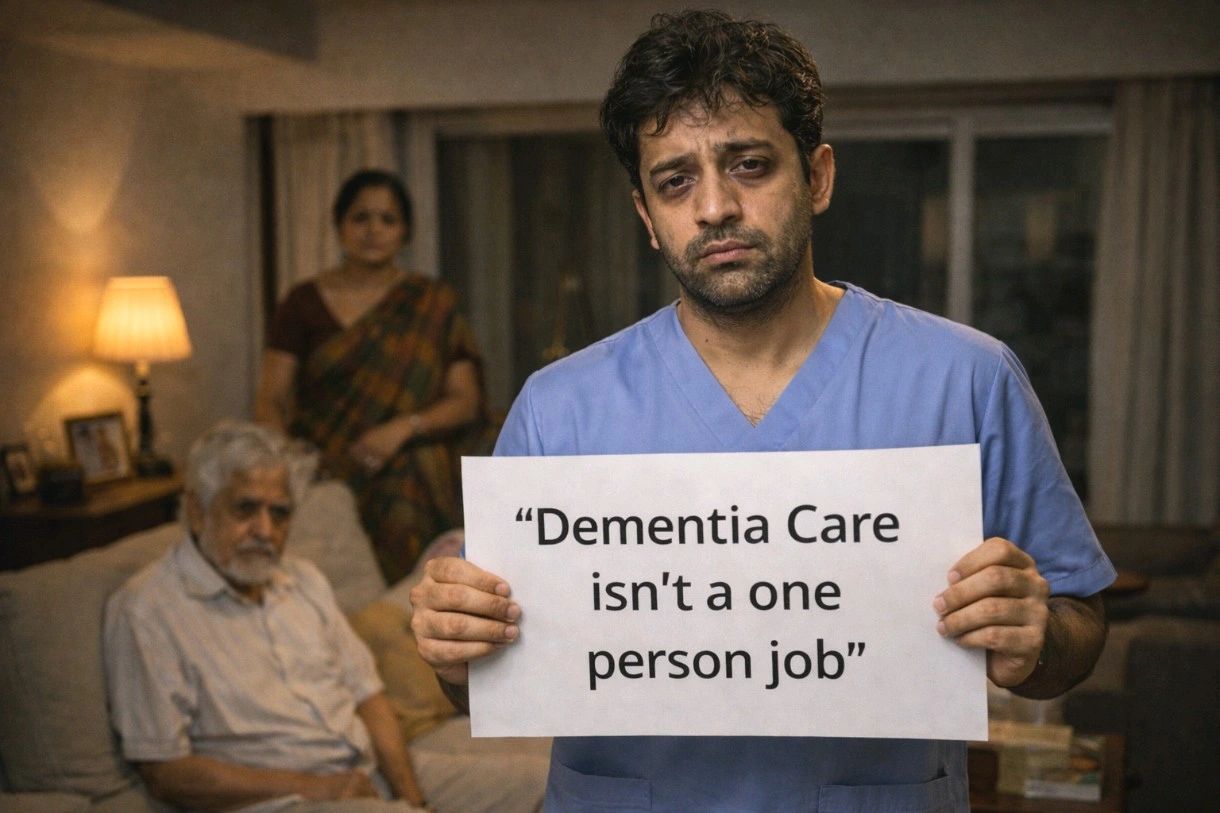
When families begin caring for a loved one with dementia, they often focus on finding the right caregiver. The expectation is understandable: hire a trained dementia caregiver, and the challenges will be managed. But after years of providing eldercare services and home healthcare for seniors, we have learned one important truth:

Dementia care is never a one-person responsibility.

It is a team effort that requires the active participation of both the family and the caregiver.

The Hidden Challenges of Dementia Care

Imagine an 85-year-old dementia patient.

One night they may be calm and cooperative. The next night they may refuse medication, become verbally aggressive, or remain awake until morning.

These behaviors are not intentional.

Dementia affects memory, judgment, emotions, and the ability to understand surroundings. As the condition progresses, even familiar faces and daily routines can become confusing.

For families, watching a loved one change can be emotionally devastating.

For caregivers, managing these situations day after day can be physically and mentally exhausting.

This is why dementia patient care requires far more than professional training alone.

Why Even the Best Dementia Caregiver Needs Family Support

Families often tell us:

“We are paying for a trained caregiver. Why can’t they handle everything?”

The reality is that dementia patients frequently respond differently to family members than they do to caregivers.

A caregiver may spend hours trying to convince an elderly person to eat, bathe, or take medication.
Yet the same person may cooperate within minutes when a son, daughter, spouse, or trusted family member steps in.
This is not a reflection of the caregiver’s ability.
It is simply the nature of dementia.

Familiar voices, faces, and emotional bonds often have a calming effect that professional caregivers cannot replace.

Two Simple Ways Families Can Improve Dementia Care

1. Share Responsibility During Difficult Hours

Night-time is often the most challenging period for dementia care.
Many patients experience confusion, agitation, wandering, sleep disturbances, or aggression after sunset—a condition commonly known as “sundowning.”
When difficult situations arise, even a few minutes of support from a family member can make a significant difference.

A familiar presence often helps reduce anxiety and creates a sense of security for the elderly individual.

2. Support the Caregiver, Not Just the Patient

One of the most overlooked aspects of eldercare is caregiver wellbeing.
A caregiver who feels respected, understood, and supported is more likely to provide consistent and compassionate care.

Simple actions can have a powerful impact:

* Sharing details about the patient’s preferences and habits
* Listening to caregiver concerns
* Providing emotional encouragement
* Working together during difficult situations
* Recognizing and appreciating their efforts

When families and caregivers function as partners, the quality of care improves dramatically.

Why Caregivers Sometimes Leave Dementia Cases

One question many families ask is:

Why do caregivers keep changing?

The assumption is often that the caregiver lacks skill or commitment.
However, the actual reason is frequently caregiver burnout.

Dementia care can involve:

* Sleep disruption
* Emotional stress
* Repeated behavioral challenges
* Physical demands
* Constant supervision

Without adequate support from family members, even highly experienced caregivers can become overwhelmed.
Reducing caregiver burnout is essential for maintaining continuity and stability in long-term dementia care.

Building a Successful Dementia Care Team

The most successful dementia care arrangements share one common feature:
Families and caregivers work together.
The caregiver brings professional experience, patience, and day-to-day support.
The family brings emotional connection, personal knowledge, and reassurance.

Neither can fully replace the other.

When both sides collaborate, elderly individuals with dementia receive the dignity, comfort, and stability they deserve.

Final Thoughts

As India’s aging population grows, the demand for professional dementia care at home is increasing rapidly. But the most effective eldercare solution is not simply hiring a trained caregiver.

It is creating a partnership between families and caregivers.

Because dementia care is not just about managing symptoms.
It is about preserving dignity, reducing stress, and ensuring that every senior receives compassionate support throughout their journey.

At Six Sigma Eldercare, we believe the best outcomes happen when families and caregivers work together—because compassionate eldercare is always a shared responsibility.

Why India’s Eldercare Market Remains Wide Open: The Challenge of Trust, Workforce & Standardization

India’s eldercare sector is at a fascinating stage of evolution. Demand for home-based care is rising rapidly, yet the industry remains highly fragmented and largely unorganized. This unique reality may be one of the biggest reasons why no single company has emerged as the undisputed leader in the space.

Unlike many technology-driven businesses, eldercare does not always require significant capital investment to begin. In many cases, a caregiver or attendant who earns the trust of a few families gradually builds a network of caregivers through personal relationships. Over time, these individuals often become local vendors supplying caregivers to larger eldercare and home healthcare companies.

As a result, the caregiver supporting an elderly person at home may not always be directly employed by the company through which the service was booked. Instead, they may be part of a broader network of local vendors and referral-based relationships.

This reflects the reality of India’s eldercare ecosystem:

* Highly fragmented
* Relationship-driven
* Trust-based
* Deeply unorganized

The Challenge

While this decentralized model allows services to expand quickly, it creates significant challenges when organizations attempt to scale.

Maintaining consistent quality of care across multiple locations becomes difficult. Training standards may vary, accountability can become diluted, and caregiver retention remains a constant concern. Families often expect the same level of service regardless of location, but delivering that consistency across a fragmented workforce is one of the industry’s toughest problems.

The Opportunity

At the same time, the sector presents enormous opportunities.

India’s ageing population is growing steadily. Nuclear families are becoming more common, and adult children are increasingly living away from their parents due to work and lifestyle changes. These demographic shifts are driving greater demand for reliable home-based eldercare services.

Despite this growing demand, the market remains far from consolidated. No company has truly “won” the space yet. This leaves significant room for innovation, service excellence, and long-term trust building.

What Will Define the Future Leader?

Funding alone may not determine who leads India’s eldercare industry in the future.

The organization that ultimately builds the country’s most trusted eldercare ecosystem may be the one that successfully combines three critical elements:

1. Trust

Families need complete confidence that their loved ones are receiving compassionate, reliable, and safe care.

2. Workforce

Building, training, supporting, and retaining a large caregiver workforce is essential for sustainable growth.

3. Standardization

Consistent processes, training protocols, quality checks, and accountability mechanisms are necessary to deliver dependable care at scale.

Looking Ahead

The next decade will be transformative for India’s eldercare sector. Demand will continue to rise, new players will enter the market, and service models will evolve.

The biggest question is no longer whether the eldercare industry will grow—it undoubtedly will.

The real question is:

Who will build India’s most trusted eldercare ecosystem by successfully bringing together trust, workforce excellence, and standardized care?

The answer to that question may shape the future of eldercare for millions of Indian families.

← Back

Thank you for your response. ✨

Papa is Alone… and I Am 12,000 Kilometers Away  

Papa is Alone… and I Am 12,000 Kilometers Away

When Distance Feels Heavy: Supporting a Father with Parkinson’s from Abroad

When a daughter called us from overseas, her voice carried a mix of love, guilt, and helplessness.

Her father in India had been living with Parkinson’s disease for several years. What began as mild tremors had gradually progressed into stiffness, slowed movements, balance issues, and moments of emotional withdrawal.

READ MORE

Knee Replacement is Not Just a Surgery

Knee Replacement is Not Just a Surgery

Knee Replacement Surgery: Why Structured Post-Operative Care Determines True Recovery

Knee replacement surgery can be life-changing. It relieves chronic pain, restores movement, and offers seniors a renewed sense of independence. But surgery is only the beginning.

READ MORE

The Silent Loneliness of Urban Elders

The Silent Loneliness of Urban Elders
When Cities Grow, Families Scatter — and Elders Are Left Behind

Urban migration has reshaped modern India. Young professionals move to cities — or abroad — chasing careers, education, and opportunity. While this shift fuels economic growth, it has quietly created an emotional vacuum at home.

READ MORE